Buy bestseo.eu ?
We are moving the project
bestseo.eu .
Are you interested in purchasing the domain
bestseo.eu ?
domain@kv-gmbh.de · 0541-91531010
Buy bestseo.eu ?
What are self-luminous bodies?
Self-luminous bodies are objects that emit their own light, as opposed to reflecting light from another source. Examples of self-luminous bodies include stars, the sun, and certain types of light bulbs. These objects generate their own energy through processes like nuclear fusion or electrical current, which produces light as a byproduct. **
Is the luminous clock radioactive?
No, the luminous clock is not radioactive. The luminescence in the clock is typically achieved using a phosphorescent material that absorbs light and then slowly releases it over time. This process does not involve any radioactive materials. The glow from the clock is simply a result of this light-absorption and emission process. **


Similar search terms for Luminous
Top-Angebote
Products related to Luminous:
-
Stonemaier Games Tapestry Board Game - Strategy Game for Civilization Building and ExplorationBuild a civilization across the ages in Tapestry, a strategy board game. Players create and develop a unique civilization, guiding it from the earliest days of humankind into the future. Each civilization follows its own path, shaped by the choices made throughout the game. Explore new territories, advance your technology, develop your capital city, and expand your civilization's influence.83,26 £*Shipping: 0,00 £Secure redirect to the provider
-
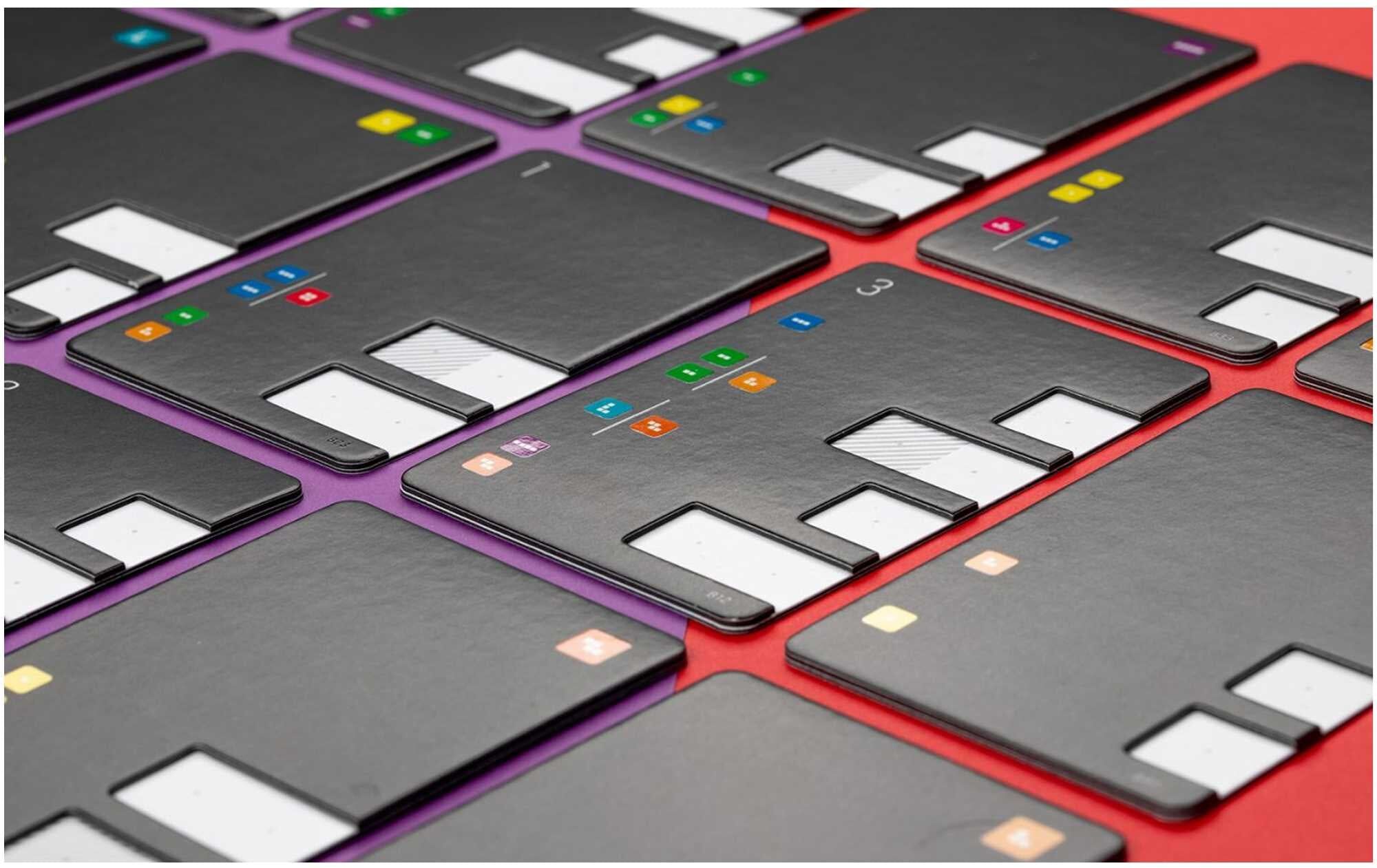
Square One - Engine-Building Strategy Game for 1-4 Players - PandaGM - NewFast-paced engine-building strategy game for 1-4 players. Includes tactile playing pieces and a focused game system built around completing sequences and triggering combinations.28,00 £*Shipping: 3,95 £Secure redirect to the provider
-
Apiary Competitive Strategy Board Game - Worker-Placement Hive-Building for 1-4 PlayersBuild a thriving spacefaring hive in Apiary, a competitive worker-placement and hive-building board game from Stonemaier Games. Players develop their hives by assigning specialized bees to gather resources, explore the surrounding universe, and expand their growing colonies. Each decision helps shape your engine and determines how efficiently your hive can develop. Apiary combines worker placement with resource management, exploration, and tableau-building elements. The game offers multiple strategic routes, allowing players to focus on different aspects of hive development during each session.59,47 £*Shipping: 0,00 £Secure redirect to the provider
-
Czech Games Edition Lost Ruins of Arnak - Strategy Board Game - Deck-Building Worker PlacementExplore a mysterious island in Lost Ruins of Arnak, a strategy board game that combines deck-building with worker placement. Lead an expedition seeking lost knowledge, manage limited resources, and uncover the secrets of an ancient civilization. Each player develops their own expedition while competing to discover valuable artifacts, overcome guardians, and advance along research tracks. Cards, workers, and carefully timed actions must be combined to make the most of every turn. This game features strategy gameplay, exploration, research, and replayability, making it suitable for players who enjoy thoughtful strategy and adventure-themed tabletop games.54,00 £*Shipping: 0,00 £Secure redirect to the provider



-
What is a luminous point?
A luminous point is a theoretical concept used in physics and optics to represent a source of light that emits light in all directions. It is often used as a simplification in the study of light and its behavior, allowing for easier calculations and analysis. In reality, a luminous point does not exist as a physical object, but it is a useful tool for understanding the behavior of light in various systems. **
-
Why is the luminous intensity and not the luminous flux specified for reflector lamps?
The luminous intensity is specified for reflector lamps because it measures the amount of light emitted in a specific direction, which is important for directional lighting applications such as spotlights and floodlights. Reflectors are designed to control and direct light in a specific direction, so specifying luminous intensity helps to ensure that the lamp is suitable for its intended purpose. Luminous flux, on the other hand, measures the total amount of visible light emitted by a source in all directions, which may not be as relevant for reflector lamps where the focus is on directing light in a specific direction. **
-
What is the difference between a self-luminous and an externally luminous object in physics?
In physics, a self-luminous object is one that produces its own light, such as the sun or a light bulb. These objects emit light due to internal processes, such as nuclear fusion or electrical excitation. On the other hand, an externally luminous object is one that reflects light from another source, such as the moon or a mirror. These objects do not produce their own light but appear illuminated due to the light they reflect from another source. **
-
What are self-luminous celestial bodies?
Self-luminous celestial bodies are objects in space that emit their own light and heat. This includes stars, which generate energy through nuclear fusion in their cores, as well as other luminous objects such as brown dwarfs and hot gas giants. These bodies are able to shine and be visible from Earth due to the light they produce, unlike non-luminous celestial bodies such as planets and moons, which reflect light from the Sun. **


What are Genshin Impact Luminous Crystals?
Genshin Impact Luminous Crystals are a type of valuable resource that can be found in the game world of Teyvat. They are used for crafting and upgrading weapons, as well as for character ascension. Luminous Crystals come in different elemental varieties, such as Anemo, Geo, Electro, and so on, and players can collect them by mining or defeating certain enemies. These crystals are essential for progressing and strengthening characters and equipment in Genshin Impact. **
How do you calculate luminous flux?
Luminous flux is calculated by multiplying the illuminance (in lux) by the area over which the light is distributed. The formula for calculating luminous flux is: Luminous flux (in lumens) = illuminance (in lux) × area (in square meters) This formula takes into account the intensity of the light (illuminance) and the size of the area over which the light is spread to determine the total luminous flux emitted by the light source. **
Top-Angebote
Products related to Luminous:
-
Aporta Games Norsewind Tableau-Building Strategy Game - Card Games - MultiIn Norsewind, the year is 793 and the kingdoms of Anglo-Saxon England face an advancing Viking threat. Take control of Wessex, Mercia, Northumbria, or East Anglia and develop your realm while preparing for attack. This tableau-building strategy game challenges you to select cards and add them to your growing kingdom. Place each card carefully to create useful combinations, gather helpful followers, and improve your castles. Expansion brings rewards, but a larger kingdom can also attract stronger Viking attacks. At the end of the game, assess each row in your tableau and score it only when your defenses can withstand the Viking power. The game features a unique blend of strategy and luck, requiring you to balance growth, preparation, and tactical placement to emerge victorious.24,97 £*Shipping: 3,95 £Secure redirect to the provider
-
Stonemaier Games Tapestry Board Game - Strategy Game for Civilization Building and ExplorationBuild a civilization across the ages in Tapestry, a strategy board game. Players create and develop a unique civilization, guiding it from the earliest days of humankind into the future. Each civilization follows its own path, shaped by the choices made throughout the game. Explore new territories, advance your technology, develop your capital city, and expand your civilization's influence.83,26 £*Shipping: 0,00 £Secure redirect to the provider
-
Square One - Engine-Building Strategy Game for 1-4 Players - PandaGM - NewFast-paced engine-building strategy game for 1-4 players. Includes tactile playing pieces and a focused game system built around completing sequences and triggering combinations.28,00 £*Shipping: 3,95 £Secure redirect to the provider
-
What are self-luminous bodies?
Self-luminous bodies are objects that emit their own light, as opposed to reflecting light from another source. Examples of self-luminous bodies include stars, the sun, and certain types of light bulbs. These objects generate their own energy through processes like nuclear fusion or electrical current, which produces light as a byproduct. **
-
Is the luminous clock radioactive?
No, the luminous clock is not radioactive. The luminescence in the clock is typically achieved using a phosphorescent material that absorbs light and then slowly releases it over time. This process does not involve any radioactive materials. The glow from the clock is simply a result of this light-absorption and emission process. **
-
What is a luminous point?
A luminous point is a theoretical concept used in physics and optics to represent a source of light that emits light in all directions. It is often used as a simplification in the study of light and its behavior, allowing for easier calculations and analysis. In reality, a luminous point does not exist as a physical object, but it is a useful tool for understanding the behavior of light in various systems. **
-
Why is the luminous intensity and not the luminous flux specified for reflector lamps?
The luminous intensity is specified for reflector lamps because it measures the amount of light emitted in a specific direction, which is important for directional lighting applications such as spotlights and floodlights. Reflectors are designed to control and direct light in a specific direction, so specifying luminous intensity helps to ensure that the lamp is suitable for its intended purpose. Luminous flux, on the other hand, measures the total amount of visible light emitted by a source in all directions, which may not be as relevant for reflector lamps where the focus is on directing light in a specific direction. **
Similar search terms for Luminous
-
Apiary Competitive Strategy Board Game - Worker-Placement Hive-Building for 1-4 PlayersBuild a thriving spacefaring hive in Apiary, a competitive worker-placement and hive-building board game from Stonemaier Games. Players develop their hives by assigning specialized bees to gather resources, explore the surrounding universe, and expand their growing colonies. Each decision helps shape your engine and determines how efficiently your hive can develop. Apiary combines worker placement with resource management, exploration, and tableau-building elements. The game offers multiple strategic routes, allowing players to focus on different aspects of hive development during each session.59,47 £*Shipping: 0,00 £Secure redirect to the provider
-
Czech Games Edition Lost Ruins of Arnak - Strategy Board Game - Deck-Building Worker PlacementExplore a mysterious island in Lost Ruins of Arnak, a strategy board game that combines deck-building with worker placement. Lead an expedition seeking lost knowledge, manage limited resources, and uncover the secrets of an ancient civilization. Each player develops their own expedition while competing to discover valuable artifacts, overcome guardians, and advance along research tracks. Cards, workers, and carefully timed actions must be combined to make the most of every turn. This game features strategy gameplay, exploration, research, and replayability, making it suitable for players who enjoy thoughtful strategy and adventure-themed tabletop games.54,00 £*Shipping: 0,00 £Secure redirect to the provider
-
Uplift Treasures Colorful Luminous Silicone Wristband Set luminous GreenProduct Description: Add a fun glow inspired touch to your everyday accessories with this 10 piece silicone wristband set. Featuring an ultra thin, flexible design, these colorful bands can be worn as bracelets or used as convenient hair ties for...28,97 $*Shipping: 0,00 $Secure redirect to the provider
-
Uplift Treasures Colorful Luminous Silicone Wristband Set luminous YellowProduct Description: Add a fun glow inspired touch to your everyday accessories with this 10 piece silicone wristband set. Featuring an ultra thin, flexible design, these colorful bands can be worn as bracelets or used as convenient hair ties for...28,97 $*Shipping: 0,00 $Secure redirect to the provider
-
What is the difference between a self-luminous and an externally luminous object in physics?
In physics, a self-luminous object is one that produces its own light, such as the sun or a light bulb. These objects emit light due to internal processes, such as nuclear fusion or electrical excitation. On the other hand, an externally luminous object is one that reflects light from another source, such as the moon or a mirror. These objects do not produce their own light but appear illuminated due to the light they reflect from another source. **
-
What are self-luminous celestial bodies?
Self-luminous celestial bodies are objects in space that emit their own light and heat. This includes stars, which generate energy through nuclear fusion in their cores, as well as other luminous objects such as brown dwarfs and hot gas giants. These bodies are able to shine and be visible from Earth due to the light they produce, unlike non-luminous celestial bodies such as planets and moons, which reflect light from the Sun. **
-
What are Genshin Impact Luminous Crystals?
Genshin Impact Luminous Crystals are a type of valuable resource that can be found in the game world of Teyvat. They are used for crafting and upgrading weapons, as well as for character ascension. Luminous Crystals come in different elemental varieties, such as Anemo, Geo, Electro, and so on, and players can collect them by mining or defeating certain enemies. These crystals are essential for progressing and strengthening characters and equipment in Genshin Impact. **
-
How do you calculate luminous flux?
Luminous flux is calculated by multiplying the illuminance (in lux) by the area over which the light is distributed. The formula for calculating luminous flux is: Luminous flux (in lumens) = illuminance (in lux) × area (in square meters) This formula takes into account the intensity of the light (illuminance) and the size of the area over which the light is spread to determine the total luminous flux emitted by the light source. **
* All prices are inclusive of VAT and, if applicable, plus shipping costs. The offer information is based on the details provided by the respective shop and is updated through automated processes. Real-time updates do not occur, so deviations can occur in individual cases. ** Note: Parts of this content were created by AI.