Buy bestseo.eu ?
We are moving the project
bestseo.eu .
Are you interested in purchasing the domain
bestseo.eu ?
domain@kv-gmbh.de · 0541-91531010
Buy bestseo.eu ?
Is the word Chef or Direktor a loanword?
The word "Chef" is a loanword, as it comes from the French language where it means "chief" or "boss." It has been borrowed into English to refer to the head cook or executive chef in a kitchen. On the other hand, "Direktor" is not a loanword, as it is a German word that means "director" or "manager." Loanwords are words borrowed from another language and incorporated into the vocabulary of another language, while "Direktor" is a native German word. **
What is the difference between loanword and loan meaning?
A loanword is a word taken from one language and used in another language with little to no translation, while a loan meaning is when a word in one language adopts a new meaning from another language. Loanwords retain their original form, while loan meanings involve a shift in the meaning of a word. Both loanwords and loan meanings contribute to the enrichment and evolution of languages through cultural exchange and borrowing. **


Similar search terms for Loanword
Top-Angebote
Products related to Loanword:
-
Stonemaier Games Tapestry Board Game - Strategy Game for Civilization Building and ExplorationBuild a civilization across the ages in Tapestry, a strategy board game. Players create and develop a unique civilization, guiding it from the earliest days of humankind into the future. Each civilization follows its own path, shaped by the choices made throughout the game. Explore new territories, advance your technology, develop your capital city, and expand your civilization's influence.83,26 £*Shipping: 0,00 £Secure redirect to the provider
-
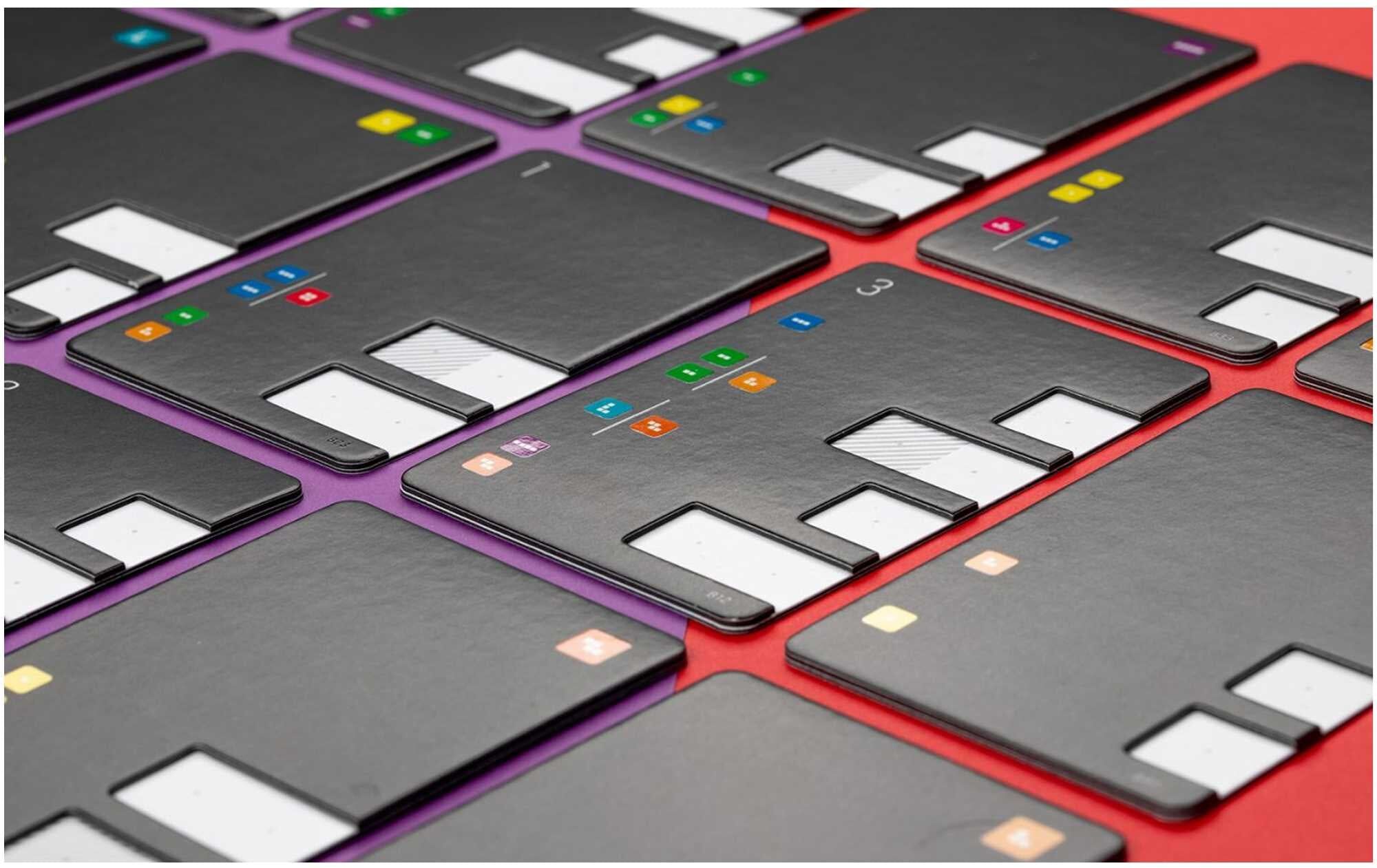
Square One - Engine-Building Strategy Game for 1-4 Players - PandaGM - NewFast-paced engine-building strategy game for 1-4 players. Includes tactile playing pieces and a focused game system built around completing sequences and triggering combinations.28,00 £*Shipping: 3,95 £Secure redirect to the provider
-
Apiary Competitive Strategy Board Game - Worker-Placement Hive-Building for 1-4 PlayersBuild a thriving spacefaring hive in Apiary, a competitive worker-placement and hive-building board game from Stonemaier Games. Players develop their hives by assigning specialized bees to gather resources, explore the surrounding universe, and expand their growing colonies. Each decision helps shape your engine and determines how efficiently your hive can develop. Apiary combines worker placement with resource management, exploration, and tableau-building elements. The game offers multiple strategic routes, allowing players to focus on different aspects of hive development during each session.59,47 £*Shipping: 0,00 £Secure redirect to the provider



-
What is a loanword and what is a long vowel?
A loanword is a word adopted from one language and incorporated into another language without translation. Loanwords often retain their original spelling and pronunciation. On the other hand, a long vowel is a vowel sound that is pronounced for an extended period of time compared to a short vowel. In English, long vowels are typically represented by a single vowel letter followed by a silent 'e' at the end of a word, such as in the word "cake." **
-
What is the difference between a loanword and a technical term?
A loanword is a word that has been borrowed from one language and incorporated into another language, often with some adaptation to fit the phonological and morphological patterns of the borrowing language. Loanwords often retain their original meaning and may be used in a variety of contexts. On the other hand, a technical term is a word or phrase that has a specific meaning within a particular field or discipline, such as science, technology, or medicine. Technical terms are often used to convey precise and specialized information within a specific context, and may not be widely understood outside of that context. While loanwords can come from any language and be used in a variety of contexts, technical terms are specific to certain fields and are used to convey specialized meanings within those fields. **
-
What is the difference between a foreign word and a loanword?
A foreign word is a word that comes from another language and is used in its original form without any adaptation or integration into the receiving language. A loanword, on the other hand, is a word that has been borrowed from another language and has been integrated into the receiving language, often with some modifications to fit the phonological, morphological, or syntactic patterns of the receiving language. In other words, a loanword is a foreign word that has been assimilated into the vocabulary of the receiving language. **
-
Does the word "Delusion" exist as a German loanword or only "Illusion"?
The word "Delusion" does exist as a German loanword, but it is not as commonly used as "Illusion." "Delusion" in German is "Täuschung," which can also be translated as "deception" or "misconception." While "Illusion" is more commonly used in both English and German, "Delusion" is still recognized as a loanword in the German language. **


What is the difference between a loanword, a foreign word, and a native word?
A loanword is a word taken from one language and used in another language with little to no translation. A foreign word is a word that originates from a different language but has been fully integrated into the vocabulary of the borrowing language. A native word is a word that is original to and commonly used in the language in which it is spoken. The key difference lies in the origin and level of integration of these words into the borrowing language. **
Does the Duden indicate whether a word is colloquial or a loanword or technical term?
Yes, the Duden does indicate whether a word is colloquial, a loanword, or a technical term. Each entry in the Duden dictionary includes information about the word's usage, including whether it is considered colloquial (informal language used in everyday conversation), a loanword (borrowed from another language), or a technical term (specific to a particular field or profession). This information helps users understand the context in which the word is typically used. **
Top-Angebote
Products related to Loanword:
-
Aporta Games Norsewind Tableau-Building Strategy Game - Card Games - MultiIn Norsewind, the year is 793 and the kingdoms of Anglo-Saxon England face an advancing Viking threat. Take control of Wessex, Mercia, Northumbria, or East Anglia and develop your realm while preparing for attack. This tableau-building strategy game challenges you to select cards and add them to your growing kingdom. Place each card carefully to create useful combinations, gather helpful followers, and improve your castles. Expansion brings rewards, but a larger kingdom can also attract stronger Viking attacks. At the end of the game, assess each row in your tableau and score it only when your defenses can withstand the Viking power. The game features a unique blend of strategy and luck, requiring you to balance growth, preparation, and tactical placement to emerge victorious.24,97 £*Shipping: 3,95 £Secure redirect to the provider
-
Groo: The Game by Steve Jackson Games - Town Building Strategy GameBuild a town while trying to keep Groo the Barbarian from reducing it to rubble. This game brings Sergio Aragonés’ comic character to the table, where rival armies and Groo’s visits threaten your plans. Players roll dice to generate resources, spend those resources on buildings or troops, and pass any unused resources to their rivals. The combination of town building and unpredictable visits creates competition around the table. One complete Groo game is supplied.29,19 £*Shipping: 3,95 £Secure redirect to the provider
-
Stonemaier Games Tapestry Board Game - Strategy Game for Civilization Building and ExplorationBuild a civilization across the ages in Tapestry, a strategy board game. Players create and develop a unique civilization, guiding it from the earliest days of humankind into the future. Each civilization follows its own path, shaped by the choices made throughout the game. Explore new territories, advance your technology, develop your capital city, and expand your civilization's influence.83,26 £*Shipping: 0,00 £Secure redirect to the provider
-
Square One - Engine-Building Strategy Game for 1-4 Players - PandaGM - NewFast-paced engine-building strategy game for 1-4 players. Includes tactile playing pieces and a focused game system built around completing sequences and triggering combinations.28,00 £*Shipping: 3,95 £Secure redirect to the provider
-
Is the word Chef or Direktor a loanword?
The word "Chef" is a loanword, as it comes from the French language where it means "chief" or "boss." It has been borrowed into English to refer to the head cook or executive chef in a kitchen. On the other hand, "Direktor" is not a loanword, as it is a German word that means "director" or "manager." Loanwords are words borrowed from another language and incorporated into the vocabulary of another language, while "Direktor" is a native German word. **
-
What is the difference between loanword and loan meaning?
A loanword is a word taken from one language and used in another language with little to no translation, while a loan meaning is when a word in one language adopts a new meaning from another language. Loanwords retain their original form, while loan meanings involve a shift in the meaning of a word. Both loanwords and loan meanings contribute to the enrichment and evolution of languages through cultural exchange and borrowing. **
-
What is a loanword and what is a long vowel?
A loanword is a word adopted from one language and incorporated into another language without translation. Loanwords often retain their original spelling and pronunciation. On the other hand, a long vowel is a vowel sound that is pronounced for an extended period of time compared to a short vowel. In English, long vowels are typically represented by a single vowel letter followed by a silent 'e' at the end of a word, such as in the word "cake." **
-
What is the difference between a loanword and a technical term?
A loanword is a word that has been borrowed from one language and incorporated into another language, often with some adaptation to fit the phonological and morphological patterns of the borrowing language. Loanwords often retain their original meaning and may be used in a variety of contexts. On the other hand, a technical term is a word or phrase that has a specific meaning within a particular field or discipline, such as science, technology, or medicine. Technical terms are often used to convey precise and specialized information within a specific context, and may not be widely understood outside of that context. While loanwords can come from any language and be used in a variety of contexts, technical terms are specific to certain fields and are used to convey specialized meanings within those fields. **
Similar search terms for Loanword
-
Apiary Competitive Strategy Board Game - Worker-Placement Hive-Building for 1-4 PlayersBuild a thriving spacefaring hive in Apiary, a competitive worker-placement and hive-building board game from Stonemaier Games. Players develop their hives by assigning specialized bees to gather resources, explore the surrounding universe, and expand their growing colonies. Each decision helps shape your engine and determines how efficiently your hive can develop. Apiary combines worker placement with resource management, exploration, and tableau-building elements. The game offers multiple strategic routes, allowing players to focus on different aspects of hive development during each session.59,47 £*Shipping: 0,00 £Secure redirect to the provider
-
Czech Games Edition Lost Ruins of Arnak - Strategy Board Game - Deck-Building Worker PlacementExplore a mysterious island in Lost Ruins of Arnak, a strategy board game that combines deck-building with worker placement. Lead an expedition seeking lost knowledge, manage limited resources, and uncover the secrets of an ancient civilization. Each player develops their own expedition while competing to discover valuable artifacts, overcome guardians, and advance along research tracks. Cards, workers, and carefully timed actions must be combined to make the most of every turn. This game features strategy gameplay, exploration, research, and replayability, making it suitable for players who enjoy thoughtful strategy and adventure-themed tabletop games.54,00 £*Shipping: 0,00 £Secure redirect to the provider
-
USA-OPOLY Avatar The Last Airbender: Aang's Destiny Cooperative Deck-Building Game - Strategy & Story Tabletop GameJoin Aang and his allies in a cooperative deck-building game inspired by the world of Avatar: The Last Airbender. Players work together to face challenges, complete objectives, and travel through the Four Nations as they seek to restore balance. Each player takes on the role of a heroic character, developing their deck throughout the game. By coordinating actions and using each character's abilities, players can overcome obstacles and help fulfill Aang's destiny as the Avatar. This game is based on the popular series and features Aang and his allies. It's suitable for fans of strategy and story-led tabletop games, and requires careful planning and teamwork to succeed.39,97 £*Shipping: 3,95 £Secure redirect to the provider
-
What is the difference between a foreign word and a loanword?
A foreign word is a word that comes from another language and is used in its original form without any adaptation or integration into the receiving language. A loanword, on the other hand, is a word that has been borrowed from another language and has been integrated into the receiving language, often with some modifications to fit the phonological, morphological, or syntactic patterns of the receiving language. In other words, a loanword is a foreign word that has been assimilated into the vocabulary of the receiving language. **
-
Does the word "Delusion" exist as a German loanword or only "Illusion"?
The word "Delusion" does exist as a German loanword, but it is not as commonly used as "Illusion." "Delusion" in German is "Täuschung," which can also be translated as "deception" or "misconception." While "Illusion" is more commonly used in both English and German, "Delusion" is still recognized as a loanword in the German language. **
-
What is the difference between a loanword, a foreign word, and a native word?
A loanword is a word taken from one language and used in another language with little to no translation. A foreign word is a word that originates from a different language but has been fully integrated into the vocabulary of the borrowing language. A native word is a word that is original to and commonly used in the language in which it is spoken. The key difference lies in the origin and level of integration of these words into the borrowing language. **
-
Does the Duden indicate whether a word is colloquial or a loanword or technical term?
Yes, the Duden does indicate whether a word is colloquial, a loanword, or a technical term. Each entry in the Duden dictionary includes information about the word's usage, including whether it is considered colloquial (informal language used in everyday conversation), a loanword (borrowed from another language), or a technical term (specific to a particular field or profession). This information helps users understand the context in which the word is typically used. **
* All prices are inclusive of VAT and, if applicable, plus shipping costs. The offer information is based on the details provided by the respective shop and is updated through automated processes. Real-time updates do not occur, so deviations can occur in individual cases. ** Note: Parts of this content were created by AI.