Buy bestseo.eu ?
We are moving the project
bestseo.eu .
Are you interested in purchasing the domain
bestseo.eu ?
domain@kv-gmbh.de · 0541-91531010
Buy bestseo.eu ?
What are oxygen atoms and carbon atoms?
Oxygen atoms are the building blocks of the element oxygen, which is essential for life and makes up a large portion of the Earth's atmosphere. Oxygen atoms have 8 protons and typically 8 neutrons, giving them a total atomic mass of 16. They are known for their ability to form strong bonds with other elements, making them crucial for the formation of molecules such as water and carbon dioxide. Carbon atoms are the building blocks of the element carbon, which is a fundamental component of all known life on Earth. Carbon atoms have 6 protons and typically 6 neutrons, giving them a total atomic mass of 12. They are known for their ability to form long chains and complex structures, making them essential for the formation of organic molecules such as proteins, carbohydrates, and DNA. **
Why are some atoms larger than other atoms?
Some atoms are larger than others because they have more protons, neutrons, and electrons, which increases their atomic mass and size. The number of electron shells and the distance of the outermost electrons from the nucleus also contribute to the size of an atom. Additionally, the arrangement of electrons in the electron shells can affect the size of an atom. Overall, the size of an atom is determined by a combination of its atomic number, electron configuration, and atomic mass. **

Similar search terms for Atoms
Top-Angebote
Products related to Atoms:
-
Stonemaier Games Tapestry Board Game - Strategy Game for Civilization Building and ExplorationBuild a civilization across the ages in Tapestry, a strategy board game. Players create and develop a unique civilization, guiding it from the earliest days of humankind into the future. Each civilization follows its own path, shaped by the choices made throughout the game. Explore new territories, advance your technology, develop your capital city, and expand your civilization's influence.84,28 £*Shipping: 0,00 £Secure redirect to the provider
-
Square One - Engine-Building Strategy Game for 1-4 Players - PandaGM - NewFast-paced engine-building strategy game for 1-4 players. Includes tactile playing pieces and a focused game system built around completing sequences and triggering combinations.28,00 £*Shipping: 3,95 £Secure redirect to the provider
-
Apiary Competitive Strategy Board Game - Worker-Placement Hive-Building for 1-4 PlayersBuild a thriving spacefaring hive in Apiary, a competitive worker-placement and hive-building board game from Stonemaier Games. Players develop their hives by assigning specialized bees to gather resources, explore the surrounding universe, and expand their growing colonies. Each decision helps shape your engine and determines how efficiently your hive can develop. Apiary combines worker placement with resource management, exploration, and tableau-building elements. The game offers multiple strategic routes, allowing players to focus on different aspects of hive development during each session.60,20 £*Shipping: 0,00 £Secure redirect to the provider




-
Will adding protons to atoms create different atoms?
No, adding protons to atoms will not create different atoms. The number of protons in an atom determines its identity as a specific element. Adding protons to an atom will change its identity and create a different element. However, adding protons to an atom can create a different isotope of the same element, which will have a different atomic mass but the same chemical properties. **
-
Which name reactions can be used to link C-atoms?
Several name reactions can be used to link C-atoms, including the Wittig reaction, the Grignard reaction, the Suzuki coupling, the Heck reaction, and the Sonogashira coupling. These reactions involve the formation of carbon-carbon bonds through various mechanisms, such as nucleophilic addition, cross-coupling, or olefin metathesis. Each of these reactions offers unique advantages and can be used to selectively link C-atoms in different types of organic molecules. **
-
Do argon atoms form when chlorine atoms gain electrons?
No, argon atoms do not form when chlorine atoms gain electrons. When chlorine atoms gain an electron, they become chloride ions with a negative charge. Argon is a noble gas and already has a full outer electron shell, so it does not need to gain or lose electrons to achieve stability. **
-
Can atoms explode?
Atoms themselves cannot explode, as they are the building blocks of matter and are stable in their natural state. However, when atoms undergo a nuclear reaction, such as nuclear fission or fusion, a large amount of energy is released in the form of an explosion. This is what happens in nuclear bombs or nuclear power plants. So, while atoms themselves cannot explode, the reactions they undergo can result in explosive energy release. **


Are atoms universes?
No, atoms are not universes. Atoms are the basic building blocks of matter, consisting of a nucleus of protons and neutrons surrounded by a cloud of electrons. Universes, on the other hand, are vast and complex systems that contain galaxies, stars, planets, and other celestial bodies. While both atoms and universes are part of the natural world, they exist at vastly different scales and levels of complexity. **
What is the difference between metal atoms and magnesium atoms?
Metal atoms refer to a broad category of elements that exhibit metallic properties, such as being good conductors of heat and electricity. Magnesium atoms, on the other hand, specifically refer to atoms of the element magnesium, which is a metal known for its light weight and high strength-to-weight ratio. While magnesium atoms are a subset of metal atoms, they have unique properties and characteristics that distinguish them from other metals. **
Top-Angebote
Products related to Atoms:
-
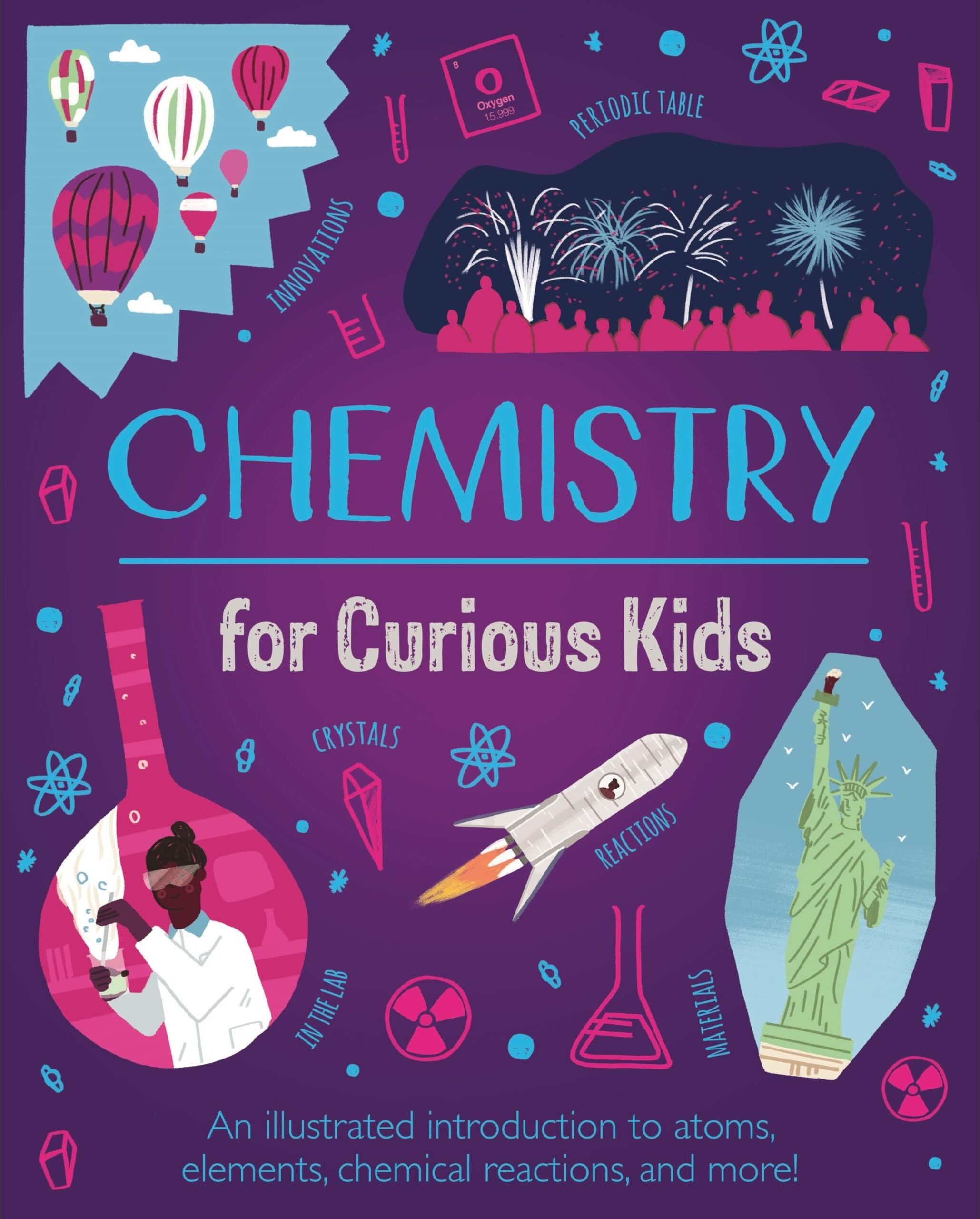
Arcturus Chemistry for Curious Kids: An Illustrated Introduction to Atoms, Elements, Chemical Reactions, and More! (Curious Kids, 2)Young readers can discover the wonders of chemistry with this accessible introduction, presented in a wonderful jacketed hardback format with full-colour illustrations. This inspirational book is packed with clear and engaging explanations of this fundamental topic, accompanied by beautiful illustrations by Alex Foster. Supporting STEM learning, this book is an ideal supplement to school education as it covers many core chemistry topics in an entertaining and easy-to-understand way. Big new concepts pop off the page thanks to vibrant diagrams and an engaging, energetic text. Kids will relish sharing them with friends and family! Young readers will love exploring exhilarating new ideas about: • Elements • Compounds • Molecules • Atoms • And much more! A great gift for readers aged 8-12.7,89 £*Shipping: 2,99 £Secure redirect to the provider
-
Aporta Games Norsewind Tableau-Building Strategy Game - Card Games - MultiIn Norsewind, the year is 793 and the kingdoms of Anglo-Saxon England face an advancing Viking threat. Take control of Wessex, Mercia, Northumbria, or East Anglia and develop your realm while preparing for attack. This tableau-building strategy game challenges you to select cards and add them to your growing kingdom. Place each card carefully to create useful combinations, gather helpful followers, and improve your castles. Expansion brings rewards, but a larger kingdom can also attract stronger Viking attacks. At the end of the game, assess each row in your tableau and score it only when your defenses can withstand the Viking power. The game features a unique blend of strategy and luck, requiring you to balance growth, preparation, and tactical placement to emerge victorious.24,97 £*Shipping: 3,95 £Secure redirect to the provider
-
Stonemaier Games Tapestry Board Game - Strategy Game for Civilization Building and ExplorationBuild a civilization across the ages in Tapestry, a strategy board game. Players create and develop a unique civilization, guiding it from the earliest days of humankind into the future. Each civilization follows its own path, shaped by the choices made throughout the game. Explore new territories, advance your technology, develop your capital city, and expand your civilization's influence.84,28 £*Shipping: 0,00 £Secure redirect to the provider
-
What are oxygen atoms and carbon atoms?
Oxygen atoms are the building blocks of the element oxygen, which is essential for life and makes up a large portion of the Earth's atmosphere. Oxygen atoms have 8 protons and typically 8 neutrons, giving them a total atomic mass of 16. They are known for their ability to form strong bonds with other elements, making them crucial for the formation of molecules such as water and carbon dioxide. Carbon atoms are the building blocks of the element carbon, which is a fundamental component of all known life on Earth. Carbon atoms have 6 protons and typically 6 neutrons, giving them a total atomic mass of 12. They are known for their ability to form long chains and complex structures, making them essential for the formation of organic molecules such as proteins, carbohydrates, and DNA. **
-
Why are some atoms larger than other atoms?
Some atoms are larger than others because they have more protons, neutrons, and electrons, which increases their atomic mass and size. The number of electron shells and the distance of the outermost electrons from the nucleus also contribute to the size of an atom. Additionally, the arrangement of electrons in the electron shells can affect the size of an atom. Overall, the size of an atom is determined by a combination of its atomic number, electron configuration, and atomic mass. **
-
Will adding protons to atoms create different atoms?
No, adding protons to atoms will not create different atoms. The number of protons in an atom determines its identity as a specific element. Adding protons to an atom will change its identity and create a different element. However, adding protons to an atom can create a different isotope of the same element, which will have a different atomic mass but the same chemical properties. **
-
Which name reactions can be used to link C-atoms?
Several name reactions can be used to link C-atoms, including the Wittig reaction, the Grignard reaction, the Suzuki coupling, the Heck reaction, and the Sonogashira coupling. These reactions involve the formation of carbon-carbon bonds through various mechanisms, such as nucleophilic addition, cross-coupling, or olefin metathesis. Each of these reactions offers unique advantages and can be used to selectively link C-atoms in different types of organic molecules. **
Similar search terms for Atoms
-
Square One - Engine-Building Strategy Game for 1-4 Players - PandaGM - NewFast-paced engine-building strategy game for 1-4 players. Includes tactile playing pieces and a focused game system built around completing sequences and triggering combinations.28,00 £*Shipping: 3,95 £Secure redirect to the provider
-
Apiary Competitive Strategy Board Game - Worker-Placement Hive-Building for 1-4 PlayersBuild a thriving spacefaring hive in Apiary, a competitive worker-placement and hive-building board game from Stonemaier Games. Players develop their hives by assigning specialized bees to gather resources, explore the surrounding universe, and expand their growing colonies. Each decision helps shape your engine and determines how efficiently your hive can develop. Apiary combines worker placement with resource management, exploration, and tableau-building elements. The game offers multiple strategic routes, allowing players to focus on different aspects of hive development during each session.60,20 £*Shipping: 0,00 £Secure redirect to the provider
-
Czech Games Edition Lost Ruins of Arnak - Strategy Board Game - Deck-Building Worker PlacementExplore a mysterious island in Lost Ruins of Arnak, a strategy board game that combines deck-building with worker placement. Lead an expedition seeking lost knowledge, manage limited resources, and uncover the secrets of an ancient civilization. Each player develops their own expedition while competing to discover valuable artifacts, overcome guardians, and advance along research tracks. Cards, workers, and carefully timed actions must be combined to make the most of every turn. This game features strategy gameplay, exploration, research, and replayability, making it suitable for players who enjoy thoughtful strategy and adventure-themed tabletop games.54,66 £*Shipping: 0,00 £Secure redirect to the provider
-
USA-OPOLY Avatar The Last Airbender: Aang's Destiny Cooperative Deck-Building Game - Strategy & Story Tabletop GameJoin Aang and his allies in a cooperative deck-building game inspired by the world of Avatar: The Last Airbender. Players work together to face challenges, complete objectives, and travel through the Four Nations as they seek to restore balance. Each player takes on the role of a heroic character, developing their deck throughout the game. By coordinating actions and using each character's abilities, players can overcome obstacles and help fulfill Aang's destiny as the Avatar. This game is based on the popular series and features Aang and his allies. It's suitable for fans of strategy and story-led tabletop games, and requires careful planning and teamwork to succeed.40,45 £*Shipping: 3,95 £Secure redirect to the provider
-
Do argon atoms form when chlorine atoms gain electrons?
No, argon atoms do not form when chlorine atoms gain electrons. When chlorine atoms gain an electron, they become chloride ions with a negative charge. Argon is a noble gas and already has a full outer electron shell, so it does not need to gain or lose electrons to achieve stability. **
-
Can atoms explode?
Atoms themselves cannot explode, as they are the building blocks of matter and are stable in their natural state. However, when atoms undergo a nuclear reaction, such as nuclear fission or fusion, a large amount of energy is released in the form of an explosion. This is what happens in nuclear bombs or nuclear power plants. So, while atoms themselves cannot explode, the reactions they undergo can result in explosive energy release. **
-
Are atoms universes?
No, atoms are not universes. Atoms are the basic building blocks of matter, consisting of a nucleus of protons and neutrons surrounded by a cloud of electrons. Universes, on the other hand, are vast and complex systems that contain galaxies, stars, planets, and other celestial bodies. While both atoms and universes are part of the natural world, they exist at vastly different scales and levels of complexity. **
-
What is the difference between metal atoms and magnesium atoms?
Metal atoms refer to a broad category of elements that exhibit metallic properties, such as being good conductors of heat and electricity. Magnesium atoms, on the other hand, specifically refer to atoms of the element magnesium, which is a metal known for its light weight and high strength-to-weight ratio. While magnesium atoms are a subset of metal atoms, they have unique properties and characteristics that distinguish them from other metals. **
* All prices are inclusive of VAT and, if applicable, plus shipping costs. The offer information is based on the details provided by the respective shop and is updated through automated processes. Real-time updates do not occur, so deviations can occur in individual cases. ** Note: Parts of this content were created by AI.