Buy bestseo.eu ?
We are moving the project
bestseo.eu .
Are you interested in purchasing the domain
bestseo.eu ?
domain@kv-gmbh.de · 0541-91531010
Buy bestseo.eu ?
What is the replication origin in DNA replication?
The replication origin is a specific sequence of DNA where the process of DNA replication begins. It is the site where the two strands of the DNA double helix are separated and the replication machinery is assembled. The replication origin is recognized by specific proteins that initiate the unwinding of the DNA and the synthesis of new DNA strands. Each DNA molecule has multiple replication origins to ensure that the entire genome is replicated efficiently. **
What is semiconservative replication?
Semiconservative replication is the process by which DNA is copied during cell division. In this process, the two strands of the DNA double helix separate, and each strand serves as a template for the synthesis of a new complementary strand. As a result, each new DNA molecule contains one original strand and one newly synthesized strand. This ensures that the genetic information is preserved and passed on to the next generation of cells. This process was first proposed by James Watson and Francis Crick in 1953. **


Similar search terms for Replication
Top-Angebote
Products related to Replication:
-
Stonemaier Games Tapestry Board Game - Strategy Game for Civilization Building and ExplorationBuild a civilization across the ages in Tapestry, a strategy board game. Players create and develop a unique civilization, guiding it from the earliest days of humankind into the future. Each civilization follows its own path, shaped by the choices made throughout the game. Explore new territories, advance your technology, develop your capital city, and expand your civilization's influence.84,28 £*Shipping: 0,00 £Secure redirect to the provider
-
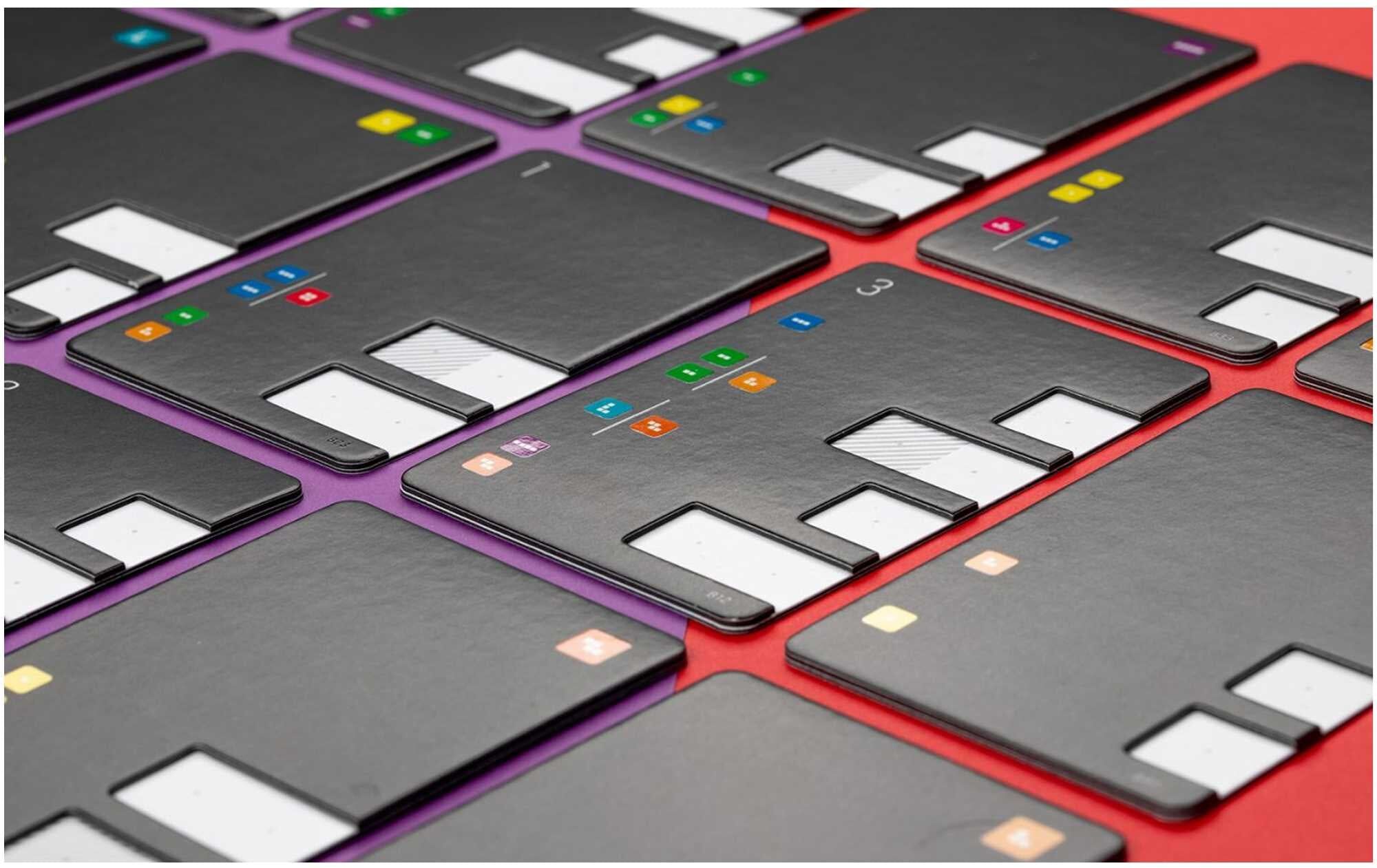
Square One - Engine-Building Strategy Game for 1-4 Players - PandaGM - NewFast-paced engine-building strategy game for 1-4 players. Includes tactile playing pieces and a focused game system built around completing sequences and triggering combinations.28,00 £*Shipping: 3,95 £Secure redirect to the provider
-
Apiary Competitive Strategy Board Game - Worker-Placement Hive-Building for 1-4 PlayersBuild a thriving spacefaring hive in Apiary, a competitive worker-placement and hive-building board game from Stonemaier Games. Players develop their hives by assigning specialized bees to gather resources, explore the surrounding universe, and expand their growing colonies. Each decision helps shape your engine and determines how efficiently your hive can develop. Apiary combines worker placement with resource management, exploration, and tableau-building elements. The game offers multiple strategic routes, allowing players to focus on different aspects of hive development during each session.60,20 £*Shipping: 0,00 £Secure redirect to the provider
-
Czech Games Edition Lost Ruins of Arnak - Strategy Board Game - Deck-Building Worker PlacementExplore a mysterious island in Lost Ruins of Arnak, a strategy board game that combines deck-building with worker placement. Lead an expedition seeking lost knowledge, manage limited resources, and uncover the secrets of an ancient civilization. Each player develops their own expedition while competing to discover valuable artifacts, overcome guardians, and advance along research tracks. Cards, workers, and carefully timed actions must be combined to make the most of every turn. This game features strategy gameplay, exploration, research, and replayability, making it suitable for players who enjoy thoughtful strategy and adventure-themed tabletop games.54,66 £*Shipping: 0,00 £Secure redirect to the provider



-
What is DNA replication?
DNA replication is the process by which a cell makes an identical copy of its DNA. This process is essential for cell division and the transmission of genetic information from one generation to the next. It involves the unwinding of the DNA double helix, the synthesis of new complementary strands using the existing strands as templates, and the proofreading and correction of any errors. DNA replication ensures that each new cell receives a complete and accurate set of genetic instructions. **
-
What is RNA self-replication?
RNA self-replication is a process where RNA molecules are able to catalyze their own replication without the need for external enzymes. This ability is crucial for the early evolution of life on Earth, as it is believed to be a key step in the transition from prebiotic chemistry to the emergence of life. RNA self-replication involves the RNA molecule acting as both a template and an enzyme, allowing it to make copies of itself. This process is a fundamental aspect of the RNA world hypothesis, which suggests that RNA played a central role in the origin of life. **
-
How does DNA replication occur?
DNA replication occurs in a semi-conservative manner, where the two strands of the double helix are separated and each strand serves as a template for the synthesis of a new complementary strand. The enzyme helicase unwinds the double helix, creating two single strands. DNA polymerase then adds new nucleotides to each single strand, following the base-pairing rules (A with T, and C with G). This results in two identical double-stranded DNA molecules, each containing one original strand and one newly synthesized strand. **
-
What is a replication bubble?
A replication bubble is a region of DNA where the double helix has been unwound and separated to allow for DNA replication to occur. It is formed by the action of helicase enzymes that unwind the DNA strands, creating two single-stranded templates for the replication process. The replication bubble expands as the replication machinery moves along the DNA, synthesizing new strands of DNA. Replication bubbles are a key feature of DNA replication and allow for the efficient and accurate copying of genetic information. **


Where does DNA replication occur?
DNA replication occurs in the nucleus of eukaryotic cells and in the cytoplasm of prokaryotic cells. In eukaryotic cells, DNA replication takes place during the S phase of the cell cycle, when the DNA is duplicated to ensure that each daughter cell receives a complete set of genetic information. The process involves the unwinding of the DNA double helix, the synthesis of new DNA strands using existing strands as templates, and the proofreading and correction of errors. Overall, DNA replication is a fundamental process that ensures the accurate transmission of genetic information from one generation to the next. **
How does semiconservative DNA replication occur?
Semiconservative DNA replication occurs in the following way: the double-stranded DNA molecule unwinds and separates into two strands. Each separated strand serves as a template for the synthesis of a new complementary strand. Enzymes called DNA polymerases add nucleotides to the new strands based on the complementary base pairing rules (A with T, C with G). As a result, two identical DNA molecules are produced, each consisting of one original strand and one newly synthesized strand. This process ensures that genetic information is faithfully passed on to daughter cells during cell division. **
Top-Angebote
Products related to Replication:
-
Aporta Games Norsewind Tableau-Building Strategy Game - Card Games - MultiIn Norsewind, the year is 793 and the kingdoms of Anglo-Saxon England face an advancing Viking threat. Take control of Wessex, Mercia, Northumbria, or East Anglia and develop your realm while preparing for attack. This tableau-building strategy game challenges you to select cards and add them to your growing kingdom. Place each card carefully to create useful combinations, gather helpful followers, and improve your castles. Expansion brings rewards, but a larger kingdom can also attract stronger Viking attacks. At the end of the game, assess each row in your tableau and score it only when your defenses can withstand the Viking power. The game features a unique blend of strategy and luck, requiring you to balance growth, preparation, and tactical placement to emerge victorious.24,97 £*Shipping: 3,95 £Secure redirect to the provider
-
Stonemaier Games Tapestry Board Game - Strategy Game for Civilization Building and ExplorationBuild a civilization across the ages in Tapestry, a strategy board game. Players create and develop a unique civilization, guiding it from the earliest days of humankind into the future. Each civilization follows its own path, shaped by the choices made throughout the game. Explore new territories, advance your technology, develop your capital city, and expand your civilization's influence.84,28 £*Shipping: 0,00 £Secure redirect to the provider
-
Square One - Engine-Building Strategy Game for 1-4 Players - PandaGM - NewFast-paced engine-building strategy game for 1-4 players. Includes tactile playing pieces and a focused game system built around completing sequences and triggering combinations.28,00 £*Shipping: 3,95 £Secure redirect to the provider
-
What is the replication origin in DNA replication?
The replication origin is a specific sequence of DNA where the process of DNA replication begins. It is the site where the two strands of the DNA double helix are separated and the replication machinery is assembled. The replication origin is recognized by specific proteins that initiate the unwinding of the DNA and the synthesis of new DNA strands. Each DNA molecule has multiple replication origins to ensure that the entire genome is replicated efficiently. **
-
What is semiconservative replication?
Semiconservative replication is the process by which DNA is copied during cell division. In this process, the two strands of the DNA double helix separate, and each strand serves as a template for the synthesis of a new complementary strand. As a result, each new DNA molecule contains one original strand and one newly synthesized strand. This ensures that the genetic information is preserved and passed on to the next generation of cells. This process was first proposed by James Watson and Francis Crick in 1953. **
-
What is DNA replication?
DNA replication is the process by which a cell makes an identical copy of its DNA. This process is essential for cell division and the transmission of genetic information from one generation to the next. It involves the unwinding of the DNA double helix, the synthesis of new complementary strands using the existing strands as templates, and the proofreading and correction of any errors. DNA replication ensures that each new cell receives a complete and accurate set of genetic instructions. **
-
What is RNA self-replication?
RNA self-replication is a process where RNA molecules are able to catalyze their own replication without the need for external enzymes. This ability is crucial for the early evolution of life on Earth, as it is believed to be a key step in the transition from prebiotic chemistry to the emergence of life. RNA self-replication involves the RNA molecule acting as both a template and an enzyme, allowing it to make copies of itself. This process is a fundamental aspect of the RNA world hypothesis, which suggests that RNA played a central role in the origin of life. **
Similar search terms for Replication
-
Apiary Competitive Strategy Board Game - Worker-Placement Hive-Building for 1-4 PlayersBuild a thriving spacefaring hive in Apiary, a competitive worker-placement and hive-building board game from Stonemaier Games. Players develop their hives by assigning specialized bees to gather resources, explore the surrounding universe, and expand their growing colonies. Each decision helps shape your engine and determines how efficiently your hive can develop. Apiary combines worker placement with resource management, exploration, and tableau-building elements. The game offers multiple strategic routes, allowing players to focus on different aspects of hive development during each session.60,20 £*Shipping: 0,00 £Secure redirect to the provider
-
Czech Games Edition Lost Ruins of Arnak - Strategy Board Game - Deck-Building Worker PlacementExplore a mysterious island in Lost Ruins of Arnak, a strategy board game that combines deck-building with worker placement. Lead an expedition seeking lost knowledge, manage limited resources, and uncover the secrets of an ancient civilization. Each player develops their own expedition while competing to discover valuable artifacts, overcome guardians, and advance along research tracks. Cards, workers, and carefully timed actions must be combined to make the most of every turn. This game features strategy gameplay, exploration, research, and replayability, making it suitable for players who enjoy thoughtful strategy and adventure-themed tabletop games.54,66 £*Shipping: 0,00 £Secure redirect to the provider
-
USA-OPOLY Avatar The Last Airbender: Aang's Destiny Cooperative Deck-Building Game - Strategy & Story Tabletop GameJoin Aang and his allies in a cooperative deck-building game inspired by the world of Avatar: The Last Airbender. Players work together to face challenges, complete objectives, and travel through the Four Nations as they seek to restore balance. Each player takes on the role of a heroic character, developing their deck throughout the game. By coordinating actions and using each character's abilities, players can overcome obstacles and help fulfill Aang's destiny as the Avatar. This game is based on the popular series and features Aang and his allies. It's suitable for fans of strategy and story-led tabletop games, and requires careful planning and teamwork to succeed.40,45 £*Shipping: 3,95 £Secure redirect to the provider
-
Inspired Living 78 Card Beginner Tarot Deck With Meanings And Upright Reversed Keywords 78 Card Beginner Tarot Deck With Meanings And Upright Reversed KeywordsDiscover the joy of reading tarot with confidence, even if you're just starting out! This beginner tarot deck features 78 illustrated cards with printed meanings to make learning simple and enjoyable. Designed with an antiqueinspired aesthetic,...23,97 $*Shipping: 0,00 $Secure redirect to the provider
-
How does DNA replication occur?
DNA replication occurs in a semi-conservative manner, where the two strands of the double helix are separated and each strand serves as a template for the synthesis of a new complementary strand. The enzyme helicase unwinds the double helix, creating two single strands. DNA polymerase then adds new nucleotides to each single strand, following the base-pairing rules (A with T, and C with G). This results in two identical double-stranded DNA molecules, each containing one original strand and one newly synthesized strand. **
-
What is a replication bubble?
A replication bubble is a region of DNA where the double helix has been unwound and separated to allow for DNA replication to occur. It is formed by the action of helicase enzymes that unwind the DNA strands, creating two single-stranded templates for the replication process. The replication bubble expands as the replication machinery moves along the DNA, synthesizing new strands of DNA. Replication bubbles are a key feature of DNA replication and allow for the efficient and accurate copying of genetic information. **
-
Where does DNA replication occur?
DNA replication occurs in the nucleus of eukaryotic cells and in the cytoplasm of prokaryotic cells. In eukaryotic cells, DNA replication takes place during the S phase of the cell cycle, when the DNA is duplicated to ensure that each daughter cell receives a complete set of genetic information. The process involves the unwinding of the DNA double helix, the synthesis of new DNA strands using existing strands as templates, and the proofreading and correction of errors. Overall, DNA replication is a fundamental process that ensures the accurate transmission of genetic information from one generation to the next. **
-
How does semiconservative DNA replication occur?
Semiconservative DNA replication occurs in the following way: the double-stranded DNA molecule unwinds and separates into two strands. Each separated strand serves as a template for the synthesis of a new complementary strand. Enzymes called DNA polymerases add nucleotides to the new strands based on the complementary base pairing rules (A with T, C with G). As a result, two identical DNA molecules are produced, each consisting of one original strand and one newly synthesized strand. This process ensures that genetic information is faithfully passed on to daughter cells during cell division. **
* All prices are inclusive of VAT and, if applicable, plus shipping costs. The offer information is based on the details provided by the respective shop and is updated through automated processes. Real-time updates do not occur, so deviations can occur in individual cases. ** Note: Parts of this content were created by AI.